


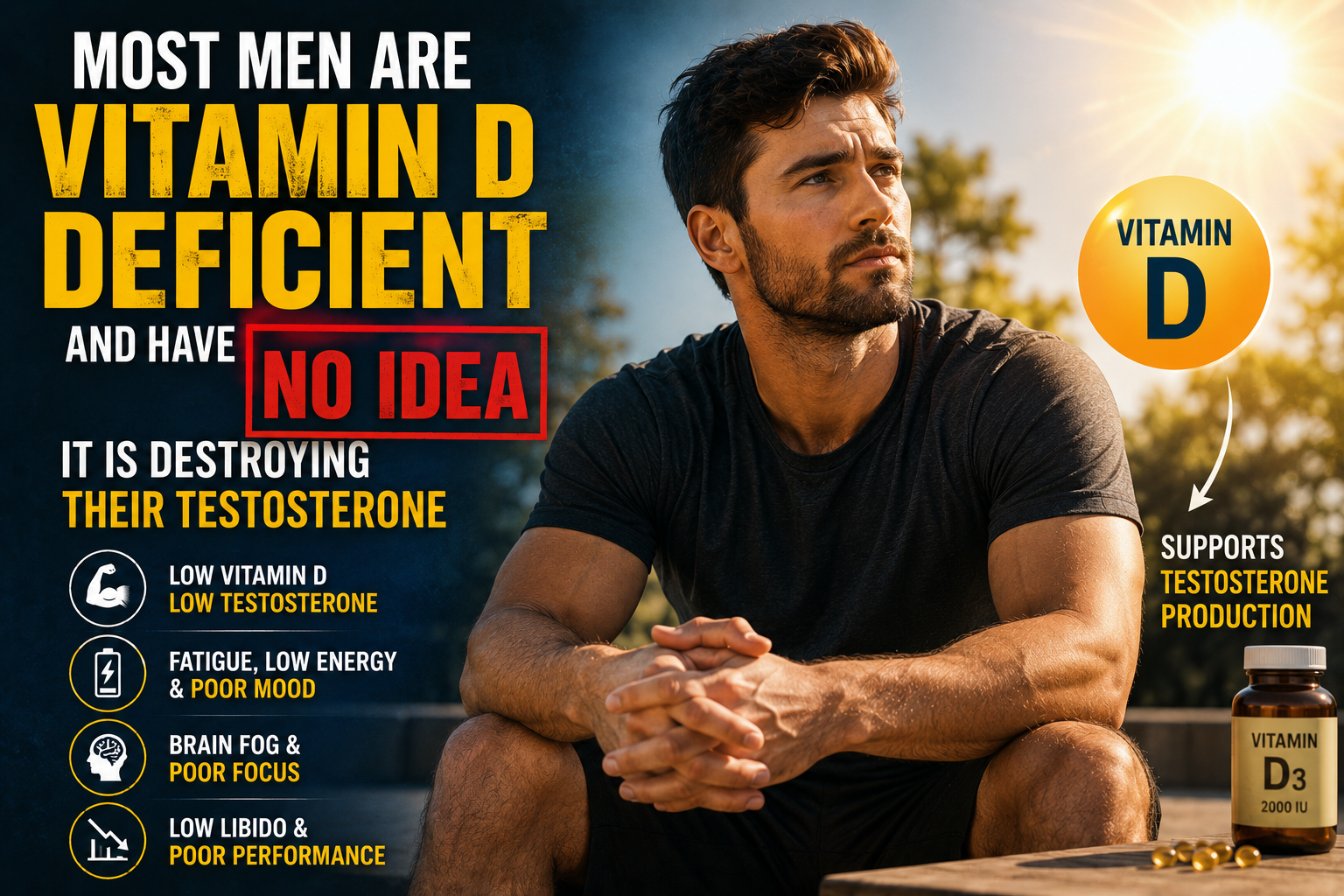
You get your blood work done. Your testosterone comes back low. Your doctor mentions lifestyle changes. Maybe you start training harder. Maybe you cut back on alcohol. You do everything right and still feel the same. Tired. Flat. Not like yourself.
What nobody checked was your vitamin D.
Research shows that up to 86 percent of men have suboptimal vitamin D levels. Most of them have no idea. And here is the part that changes everything: vitamin D does not function like a regular vitamin in your body. It functions like a steroid hormone. One that directly controls whether your testes can produce testosterone at full capacity.
If your vitamin D is low your testosterone is almost certainly suffering because of it. And no amount of training, sleep optimization, or dietary changes will fully fix your hormonal health until that deficiency is addressed.
This article explains exactly how vitamin D and testosterone are connected, why so many men are deficient, what the symptoms actually look like and what to do about it
Vitamin D Is Not Really a Vitamin
This is the first thing most men get wrong about vitamin D. They think of it as a supplement you take in winter to avoid getting colds. That is a dramatic underestimation of what it actually does.
Vitamin D is a fat soluble secosteroid. Your body produces it when your skin is exposed to UVB radiation from sunlight and then converts it through your liver and kidneys into its active hormonal form called calcitriol. Calcitriol then travels through your bloodstream and binds to vitamin D receptors found in almost every tissue in your body.
Those vitamin D receptors are present in your testes. Specifically in the Leydig cells which are the cells responsible for producing testosterone. Without adequate vitamin D signaling those cells cannot function at their full hormonal output capacity. The machinery exists. The raw materials may be present. But without the hormonal signal from vitamin D the production line slows down.
A comprehensive systematic review published in Cureus in 2023 analyzing eight clinical studies confirmed a significant and consistent association between vitamin D deficiency and lower testosterone levels in adult men. This is not a fringe theory. It is well established science that most routine health checkups simply do not account for.
The Research Is Clear and Most Doctors Are Ignoring It
The clinical evidence connecting vitamin D and testosterone is actually quite strong.
A landmark randomized controlled trial published in Hormone and Metabolic Research followed 65 men over one year. The group that supplemented with approximately 3300 IU of vitamin D daily increased their testosterone levels by around 25 percent compared to the placebo group. That is a meaningful hormonal change from a single nutrient intervention.
A separate large scale analysis of over 2000 men confirmed that those with higher circulating vitamin D levels consistently had higher total and free testosterone. The relationship was dose-dependent meaning higher vitamin D correlated with higher testosterone across the range studied.
A 2025 study published in the journal Nutrients examining men with late onset hypogonadism found that vitamin D status directly influenced how well testosterone replacement therapy worked. Men with adequate vitamin D showed significantly better cardiometabolic outcomes from TRT than those who remained deficient. This means even if you are on medical testosterone treatment vitamin D deficiency can blunt the results.
The mechanism works in multiple directions. Vitamin D stimulates Leydig cell function to produce more testosterone. It also lowers Sex Hormone Binding Globulin which is the protein that binds testosterone and renders it biologically inactive. Less SHBG means more free testosterone doing actual work in your body. And vitamin D reduces systemic inflammation which is itself a known suppressor of testosterone production.
Why Most Men Are Deficient
Understanding that vitamin D matters is only half the picture. The more uncomfortable reality is that the modern male lifestyle makes deficiency almost inevitable.
Your skin produces vitamin D when exposed to UVB radiation from sunlight. But this only happens under specific conditions. The sun needs to be high enough in the sky that UVB rays can penetrate the atmosphere. In most parts of the United States and Europe this only occurs reliably between late spring and early autumn and only during midday hours. Morning and evening sun do not produce meaningful vitamin D synthesis regardless of how much time you spend outside.
Most working men spend the majority of their daylight hours indoors. Office jobs, commutes, and evening schedules mean that even in summer many men get minimal effective sun exposure. Factor in geographic latitude, darker skin tones that require longer exposure times, sunscreen use, and body weight and the deficiency picture becomes even clearer. Body fat sequesters vitamin D making it less bioavailable in men who carry excess weight.
Dietary vitamin D is difficult to obtain in meaningful amounts. Fatty fish, egg yolks, and fortified dairy products contain some but getting adequate vitamin D through food alone without supplementation is genuinely difficult even with a good diet.
The result is that vitamin D deficiency is not an edge case. It is the statistical norm for men in developed countries particularly those over 35 who spend most of their time indoors.
What Vitamin D Deficiency Actually Feels Like
This is where things get complicated because the symptoms of vitamin D deficiency overlap almost completely with the symptoms of low testosterone and general burnout. Most men experiencing these symptoms never connect them to vitamin D because they do not know the connection exists.
Persistent fatigue that does not improve with more sleep is one of the most common symptoms. Men describe feeling unrefreshed no matter how long they sleep. Energy levels feel fundamentally lower than they used to be without a clear reason.
Low mood and emotional flatness are frequently reported. Not dramatic depression necessarily but a kind of muted engagement with life. Things that used to feel rewarding feel neutral. Motivation is harder to access. The hormonal connection behind this pattern is explained in depth in this article on men’s mental health and testosterone which covers how vitamin D, testosterone, and brain chemistry are all linked.
Muscle weakness and slower recovery from exercise are common. Men who train consistently notice that their strength gains have stalled or reversed and that soreness lingers longer than it used to. This is particularly confusing for men who are doing everything else right in the gym.
Joint aches particularly in the knees, hips, and lower back without a clear injury cause are a recognised symptom of vitamin D deficiency that most men attribute to aging or overtraining.
Reduced sex drive and sexual performance issues including the kind of performance problems covered in this guide on stress and anxiety erectile dysfunction often have vitamin D deficiency as a contributing hormonal factor that goes undetected.
Frequent illness and slow recovery from infections are also connected. Vitamin D is a critical regulator of immune function and deficient men show measurably higher rates of respiratory infections and slower recovery times.
The Overlap With Low Testosterone Symptoms
Here is what makes vitamin D deficiency particularly tricky to identify. Every symptom described above is also a symptom of low testosterone. Fatigue. Low mood. Muscle weakness. Reduced libido. Poor recovery. Brain fog.
This creates a situation where men are being evaluated for low testosterone when their actual primary deficiency is vitamin D. Or more commonly both are present simultaneously and correcting testosterone without addressing vitamin D produces incomplete results.
The practical implication is straightforward. Any man getting a testosterone blood panel should also be getting a 25-hydroxyvitamin D test at the same time. They are not the same thing. Both need to be checked. If you want a full picture of what is actually driving your symptoms this complete guide on low testosterone symptoms in men over 30 explains the full diagnostic picture and what each blood marker means.
How Low Is Too Low
Vitamin D is measured in the blood as 25-hydroxyvitamin D or 25(OH)D. There is ongoing debate about what constitutes optimal levels but the general clinical consensus is:
Severely deficient: below 20 ng/mL. At this level significant hormonal, immune, and musculoskeletal effects are well documented.
Deficient: 20 to 29 ng/mL. Many men fall into this range and are told their levels are acceptable when in fact they are suboptimal for hormonal health.
Sufficient: 30 to 50 ng/mL. This is the minimum range most endocrinologists consider adequate for general health.
Optimal for hormonal function: 50 to 70 ng/mL. The research on testosterone specifically suggests that higher levels within this range are associated with better hormonal outcomes in men.
The key point is that a result of 22 ng/mL may be labeled as within range by a standard lab report but it is nowhere near the level associated with optimal testosterone production. Ask your doctor specifically about your vitamin D level and what the optimal target range is for hormonal health rather than just general sufficiency.
How to Actually Fix It
The good news is that vitamin D deficiency is one of the most straightforward nutrient deficiencies to address. But doing it correctly matters.
Get tested first. Do not start supplementing based on symptoms alone. A simple blood test will tell you exactly where your levels are and how aggressive your supplementation needs to be. Two men with fatigue and low mood may have completely different vitamin D levels requiring completely different approaches.
Supplement with D3 not D2. Vitamin D3 is the form your body naturally produces from sunlight and is significantly more effective at raising blood levels than the D2 form found in some supplements and fortified foods. Always choose D3.
Always pair D3 with K2. Vitamin D increases calcium absorption. Vitamin K2 directs that calcium into bones and teeth rather than arteries and soft tissue. Taking D3 without K2 long term can create calcium related issues. Most high-quality vitamin D supplements now include K2. Look for the MK-7 form of K2.
Dosing depends on your baseline. For men with severe deficiency doctors often recommend 5000 IU daily for eight to twelve weeks before retesting. For maintenance once levels are optimal 2000 to 3000 IU daily is typically sufficient. Do not self-prescribe high doses without testing. Vitamin D toxicity is rare but it is possible with chronically excessive supplementation.
Get morning sunlight consistently. Even though morning sun does not produce vitamin D it anchors your circadian rhythm and supports the sleep quality that is essential for testosterone production. The sleep and testosterone connection is explained in detail in this article on deep sleep and growth hormone which covers why nighttime hormone production is just as important as daytime nutrition.
Combine with magnesium. Magnesium is required for the conversion of vitamin D to its active hormonal form. Many men who supplement with vitamin D but remain deficient are actually magnesium deficient and cannot properly activate the vitamin D they are taking. Magnesium glycinate at 300 to 400mg daily is the most bioavailable form for most people
Vitamin D Is One Piece of a Larger Picture
Fixing vitamin D will not solve everything on its own. It is one critical piece of a hormonal ecosystem that also includes sleep, training, stress management, body composition, and overall nutritional status.
What it will do is remove one of the most common and most overlooked roadblocks to hormonal recovery. Men who address their vitamin D deficiency alongside the other fundamentals consistently report meaningful improvements in energy, mood, strength and sexual health within eight to sixteen weeks.
The men who continue to struggle despite doing everything else right are often the ones whose vitamin D has never been tested and addressed. Do not be one of them.
If energy is still your primary complaint after addressing vitamin D this guide on how to boost energy naturally for men covers the full picture of what drives and restores male energy levels. And if you want to understand all the ways low testosterone shows up physically and emotionally the article on signs of low testosterone most men ignore is worth reading alongside your blood results.
Frequently Asked Questions
Q: Can vitamin D deficiency cause low testosterone by itself?
Research shows a clear association between vitamin D deficiency and lower testosterone levels. Vitamin D directly influences Leydig cell function in the testes and lowers SHBG which increases free testosterone. Whether the relationship is purely causal in both directions or partly correlational is still being studied but the clinical evidence strongly supports addressing vitamin D as part of any testosterone optimization protocol.
Q: How long does it take for vitamin D supplementation to improve testosterone levels?
The randomized controlled trial showing a 25 percent testosterone increase ran for one year. However meaningful improvements in energy, mood, and general wellbeing from correcting deficiency are often reported within six to twelve weeks. Full hormonal normalization takes longer. Retest your levels after three months of supplementation to assess progress.
Q: What is the best time of day to take vitamin D?
Vitamin D is fat-soluble meaning it is best absorbed when taken with a meal containing some dietary fat. Many people take it with breakfast or lunch. Taking it too late in the evening may interfere with sleep for some individuals though the evidence on this is mixed. Consistency matters more than timing.
Q: Should I get vitamin D from sunlight or supplements?
Both where possible. Sunlight produces vitamin D in a natural self-regulating way that makes toxicity essentially impossible through sun exposure alone. But for most men living in northern latitudes or working indoors sunlight alone is insufficient year-round. Supplementation fills the gap. During summer months adequate sun exposure plus a maintenance dose supplement covers most men well.
Q: Can I take too much vitamin D?
Yes. Vitamin D toxicity from supplementation is rare but real. It occurs through calcium buildup in the blood and can cause nausea, weakness, kidney problems, and heart rhythm abnormalities. It does not occur from sun exposure. The key is testing before supplementing heavily and retesting after three months to ensure levels are moving into the optimal range without overshooting. Doses above 10000 IU daily long term should always be medically supervised.
Q: Does losing weight improve vitamin D levels?
Yes. Body fat sequesters vitamin D making it less bioavailable. Men who lose significant body fat often see their vitamin D levels rise even without changing supplementation. This is one of the many hormonal benefits of reducing visceral fat. The relationship between body composition and testosterone is covered in detail in this guide on how to boost testosterone naturally which explains all the lifestyle factors that directly drive hormonal recovery.
Q: If I fix my vitamin D will my testosterone fully recover on its own?
It depends on how deficient you were and what other factors are at play. For men with mild deficiency and otherwise healthy lifestyles correcting vitamin D can produce significant testosterone improvements. For men with clinically confirmed hypogonadism from multiple causes vitamin D correction is an important part of the picture but may not be sufficient alone. A full hormonal panel and a conversation with a doctor are the right next steps.
About the Author: Written by Sarah Mitchell Professional Medical Content Writer specialising in metabolic health, men’s health and lifestyle medicine. Medically reviewed by Dr. James Harper Endocrinology and Internal Medicine Specialist.
Medical References
- Monson NR, et al. “Association Between Vitamin D Deficiency and Testosterone Levels in Adult Males: A Systematic Review.” Cureus. 2023;15(9):e45856. DOI: 10.7759/cureus.45856. View Source
- Pilz S, et al. “Effect of vitamin D supplementation on testosterone levels in men.” Hormone and Metabolic Research. 2011;43(3):223-225. DOI: 10.1055/s-0030-1269854. View Source
- Lerchbaum E, et al. “Vitamin D and testosterone in healthy men: a randomized controlled trial.” Journal of Clinical Endocrinology and Metabolism. 2017;102(11):4292-4302. View Source
- Canguven O, et al. “Vitamin D treatment improves levels of sexual hormones, metabolic parameters and erectile function in middle-aged vitamin D deficient men.” Aging Male. 2017;20(1):9-16. View Source
- Kuchuk NO, et al. “Vitamin D status determines cardiometabolic effects of testosterone replacement therapy in men with late-onset hypogonadism.” Nutrients. 2025;17(6):1013. DOI: 10.3390/nu17061013. View Source
- Wehr E, et al. “Association of vitamin D status with serum androgen levels in men.” Clinical Endocrinology. 2010;73(2):243-248. View Source
- National Institutes of Health Office of Dietary Supplements. “Vitamin D: Fact Sheet for Health Professionals.” Updated 2025. View Source
- Holick MF. “Vitamin D deficiency.” New England Journal of Medicine. 2007;357(3):266-281. View Source