


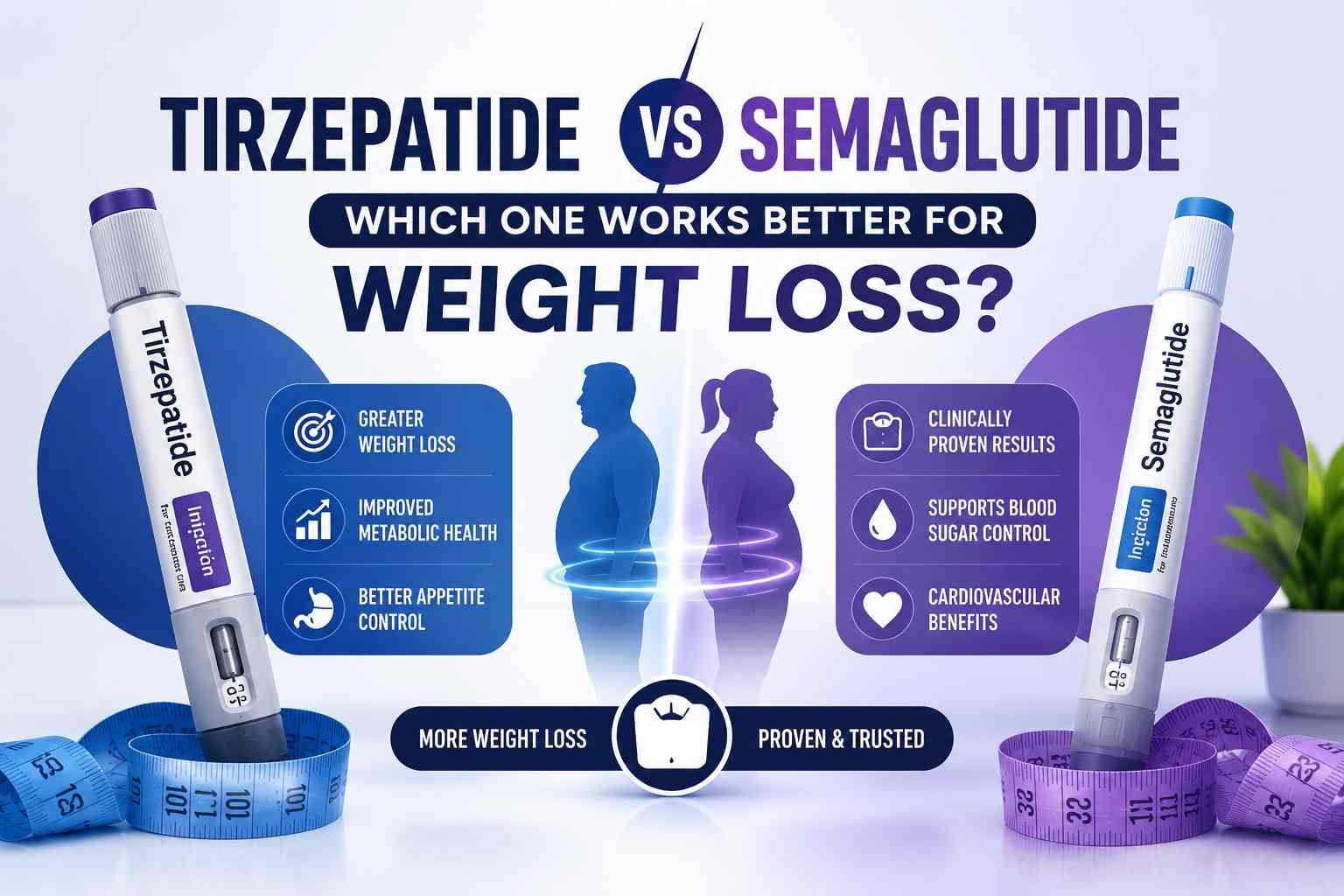
If you have been researching weight loss medications recently you have almost certainly come across two names Tirzepatide and Semaglutide. Both belong to a new class of injectable medications that have genuinely changed how doctors approach obesity treatment. Both produce meaningful weight loss. And both come with a lot of questions.
This article breaks down what each drug actually does how they compare in clinical trials who they are suited for and what the science currently says about which one may work better. No hype. Just the evidence.
It is worth noting upfront that both medications require a prescription and should only be used under medical supervision. This article is educational only and does not constitute medical advice.
What Are These Medications and How Do They Work?
To understand the difference between these two drugs you first need to understand the hormone systems they target.
Semaglutide: A GLP 1 Receptor Agonist
Semaglutide works by mimicking a naturally occurring hormone called GLP-1 (glucagon-like peptide-1). This hormone is released after eating and does several things it signals to your brain that you are full it slows the rate at which your stomach empties and it stimulates insulin release in response to blood sugar.
By amplifying this signal artificially semaglutide reduces appetite helps regulate blood sugar and leads to meaningful calorie reduction over time. It is sold under the brand names Ozempic (approved for type 2 diabetes) and Wegovy (approved specifically for weight loss).
Tirzepatide: A Dual GIP and GLP 1 Receptor Agonist
Tirzepatide goes one step further. It targets two hormone receptors simultaneously GLP-1 and GIP (glucose dependent insulinotropic polypeptide). GIP is another gut hormone that influences fat storage metabolism and appetite. By activating both receptors at once tirzepatide creates a stronger combined effect on appetite suppression and metabolic regulation.
It is sold under the brand names Mounjaro (approved for type 2 diabetes) and Zepbound (approved for chronic weight management). The dual action mechanism is what makes it fundamentally different from semaglutide in terms of how it works at a biological level.
What Do the Clinical Trials Actually Show?
This is where the comparison gets particularly interesting. Both medications have been tested in large well designed clinical trials and the results give us a fairly clear picture.
Semaglutide: The STEP Trials
The STEP 1 trial published in the New England Journal of Medicine in 2021 found that adults with obesity who took semaglutide 2.4 mg weekly lost an average of 14.9 percent of their body weight over 68 weeks compared to 2.4 percent in the placebo group. That was a landmark result that established semaglutide as a serious medical treatment for obesity rather than a lifestyle aid.
Tirzepatide: The SURMOUNT Trials
The SURMOUNT-1 trial published in the New England Journal of Medicine in 2022 produced even more striking results. Participants on the highest dose of tirzepatide (15 mg weekly) lost an average of 22.5 percent of their body weight over 72 weeks. That is roughly 50 to 57 pounds for someone starting at 250 pounds.
To put that in context the 22.5 percent figure starts to approach the weight loss seen with bariatric surgery which has historically been considered the gold standard for severe obesity treatment.
| Comparison Point | Semaglutide (Wegovy) | Tirzepatide (Zepbound) |
| Mechanism | GLP-1 agonist | Dual GLP-1 + GIP agonist |
| Average weight loss | Around 15 percent | Up to 22.5 percent |
| Weekly dose (max) | 2.4 mg | 15 mg |
| FDA approved for weight loss | Yes (Wegovy) | Yes (Zepbound) |
| Also approved for diabetes | Yes (Ozempic) | Yes (Mounjaro) |
| Common side effects | Nausea vomiting diarrhoea | Nausea vomiting diarrhoea |
| Cardiovascular benefit data | Strong (SELECT trial) | Emerging (SURPASS-CVOT) |
Side Effects: Are They Different?
Both medications share a similar side effect profile because they both activate GLP-1 receptors. The most commonly reported effects are gastrointestinal and include nausea vomiting diarrhoea and constipation. These tend to be most noticeable when starting the medication or increasing the dose and typically settle after a few weeks.
Some patients on tirzepatide report slightly more pronounced nausea at the start possibly because of the additional GIP activation. However large scale trial data does not show a significantly higher discontinuation rate due to side effects compared to semaglutide.
Both medications carry a boxed warning regarding a potential risk of thyroid C-cell tumours based on animal studies. Neither is recommended for people with a personal or family history of medullary thyroid carcinoma or Multiple Endocrine Neoplasia syndrome type 2. Both should be avoided during pregnancy.
Who Is Each Medication Better Suited For?
The honest answer is that the best medication depends heavily on the individual. That said there are some general patterns worth understanding.
Semaglutide may be more suitable if:
- You have established cardiovascular disease. The SELECT trial published in 2023 demonstrated that semaglutide significantly reduced the risk of major cardiovascular events in people with obesity and existing heart disease. This cardiovascular data is currently more robust for semaglutide than for tirzepatide.
- You have had a reasonable response to GLP-1 medications before and are looking for a well-established option with a longer track record.
- Cost or insurance coverage is a significant factor as semaglutide has been on the market longer and may have broader formulary access in some regions.
Tirzepatide may be more suitable if:
- Maximising weight loss is the primary goal. The SURMOUNT trial data consistently shows greater average weight reduction at the highest doses compared to semaglutide.
- You have type 2 diabetes alongside obesity as the dual mechanism appears particularly effective at improving blood sugar control and reducing body weight simultaneously.
- You have not achieved sufficient results on semaglutide alone as tirzepatide’s additional GIP pathway offers a different biological approach.
So Which One Actually Works Better?
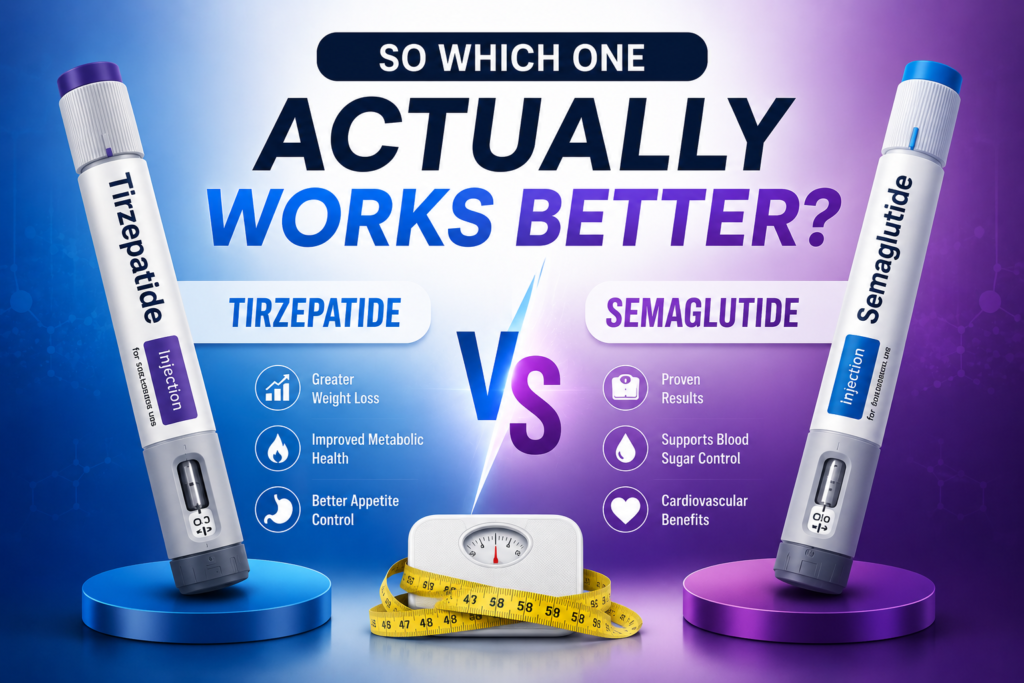
Based on the available clinical evidence tirzepatide produces greater average weight loss than semaglutide. The numbers from the respective trials are not a close comparison: roughly 15 percent average body weight loss with semaglutide versus up to 22.5 percent with tirzepatide at maximum doses.
However there are important caveats to keep in mind before drawing firm conclusions.
First the STEP and SURMOUNT trials were not head to head comparisons. They used different patient populations different trial durations and slightly different baseline characteristics. Direct comparison between trial results can be misleading.
A 2023 retrospective real-world analysis published in JAMA Internal Medicine compared patients prescribed either drug and found tirzepatide users lost significantly more weight over 12 months. But real world data also reflects differences in patient selection prescribing patterns and adherence which complicates interpretation.
The most accurate answer is this for most people tirzepatide appears to produce greater weight loss on average. But individual response varies considerably and the best medication for any specific person depends on their health history other medications cost access and how their body responds.
Final Thoughts
Both tirzepatide and semaglutide represent a genuine step forward in how medicine approaches obesity and metabolic disease. For years the standard advice was simply to eat less and move more and while lifestyle change remains important these medications acknowledge that obesity has a biological and hormonal dimension that willpower alone cannot always overcome.
The clinical evidence currently suggests tirzepatide vs semaglutide comparisons favour tirzepatide in terms of average weight loss at the highest doses. But the right choice is not universal. It depends on your individual health profile your goals and a conversation with a doctor who knows your medical history.
What is clear is that both options are worth knowing about if weight management is part of your health journey.
FAQs.
Can I switch from semaglutide to tirzepatide?
Yes some patients do switch between the two and some studies suggest that people who plateau on semaglutide may see additional weight loss after switching to tirzepatide. This should always be done under the guidance of a prescribing doctor who can manage the transition safely.
How long do you need to stay on these medications?
Clinical trial data shows that a significant portion of weight regain occurs when these medications are stopped. This suggests they may need to be taken long-term for sustained effect similar to how blood pressure or cholesterol medications work. This is an area of ongoing research and individual circumstances vary considerably.
Are these medications safe for everyone with obesity?
No. Both medications have specific contraindications including a personal or family history of certain thyroid cancers pancreatitis and other conditions. A full medical assessment by a qualified healthcare provider is essential before starting either treatment.
Is tirzepatide approved everywhere?
As of 2024 tirzepatide under the brand name Zepbound received FDA approval in the United States for chronic weight management. Approval status varies by country and region. Check with your local regulatory authority or healthcare provider for current availability in your area.
What happens if I miss a dose?
For both medications if you miss a weekly dose and it has been less than four days you can take it as soon as you remember. If more than four days have passed skip the missed dose and continue with your regular schedule. Never take two doses to make up for a missed one. Contact your prescriber if you are unsure.
About the Author
Dr. Sarah Mitchell is a Clinical Content Reviewer with a background in endocrinology and metabolic medicine. This article was medically reviewed by Dr. Joseph Palumbo Senior Medical Adviser and qualified GP with over 15 years of experience in NHS and private practice.
Medical References
- Wilding JPH et al. Once-Weekly Semaglutide in Adults with Overweight or Obesity. New England Journal of Medicine. 2021. View Source
- Jastreboff AM et al. Tirzepatide Once Weekly for the Treatment of Obesity. New England Journal of Medicine. 2022. View Source
- Lincoff AM et al. Semaglutide and Cardiovascular Outcomes in Obesity without Diabetes (SELECT Trial). New England Journal of Medicine. 2023. View Source
- Comparison of Tirzepatide and Semaglutide for Weight Loss in Adults with Type 2 Diabetes. JAMA Internal Medicine. 2023. View Source
- FDA Drug Approval: Zepbound (Tirzepatide) for Chronic Weight Management. U.S. Food and Drug Administration. 2023. View Source
- Mayo Clinic. Tirzepatide (Subcutaneous Route) — Description and Brand Names. Mayo Clinic. 2024. View Source