


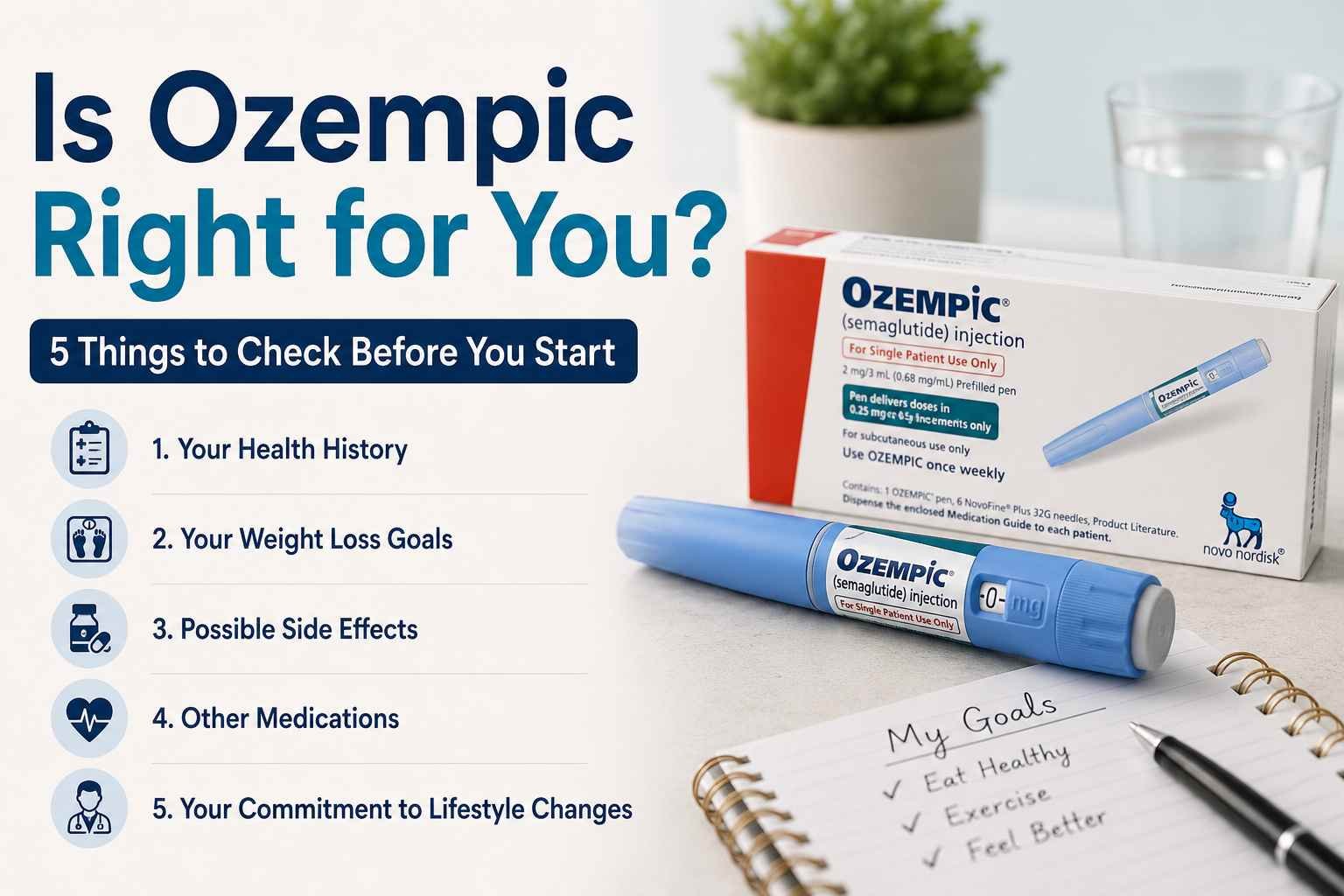
You have probably heard the buzz about Ozempic. It is on the news, trending on social media, and being talked about in doctor’s offices across the country. But before you call your doctor and ask for a prescription, there is one important question you need to answer Is Ozempic actually right for you?
The honest answer? It depends. Ozempic (semaglutide) is a powerful FDA approved medication but it is not a one size fits all solution. It comes with real benefits, real risks, and strict eligibility criteria. If you skip these checks, you could end up with serious side effects, wasted money, or a medication that simply does not work for your situation.
In this guide, we will walk you through 5 essential things you must check before starting Ozempic. This is not medical advice always talk to your doctor but these checkpoints will help you walk into that appointment informed and prepared.
What Is Ozempic? A Quick Overview
Ozempic is a brand name injectable medication made by Novo Nordisk. Its active ingredient is semaglutide, a GLP 1 receptor agonist. Originally approved by the FDA in 2017 to treat type 2 diabetes, it works by mimicking a natural gut hormone that tells your brain you are full, slows digestion, and lowers blood sugar levels.
It is given as a once weekly injection, typically starting at 0.5 mg and increasing up to 2 mg depending on how your body responds. You may also have heard of Wegovy, which is the same molecule (semaglutide) but approved at a higher dose specifically for weight loss.
| Key Fact Ozempic is FDA approved for type 2 diabetes management not officially for weight loss. However, many doctors prescribe it off-label for obesity or weight-related conditions. |
5 Things to Check Before You Start Ozempic
1: Do You Meet the Medical Eligibility Criteria?
The very first thing to confirm is whether you actually qualify for Ozempic. This is not just a box-ticking exercise it is about your safety.
Who Is Ozempic Officially Approved For?
- Adults with type 2 diabetes who need better blood sugar control
- People at high cardiovascular risk who need to reduce the chance of heart attack or stroke
- Adults with a BMI of 30 or higher (when prescribed as Wegovy for weight management)
- Adults with a BMI of 27+ who have at least one weight-related condition like hypertension or high cholesterol
Who Should NOT Take Ozempic?
- People with a personal or family history of medullary thyroid carcinoma (MTC) or Multiple Endocrine Neoplasia syndrome type 2 (MEN 2)
- Pregnant or breastfeeding women
- People with severe gastrointestinal disease or a history of pancreatitis
- Individuals with type 1 diabetes or diabetic ketoacidosis
Bottom line: Your doctor will review your full medical history before prescribing. Do not self-diagnose your eligibility based on social media posts.
2: Are You Aware of the Side Effects?
One of the most common reasons people stop Ozempic is unexpected side effects. The medication works well for many people but it is not always a smooth ride, especially at the beginning.
Common Side Effects
- Nausea (most common, especially in the first few weeks)
- Vomiting and diarrhea
- Stomach pain or bloating
- Constipation
- Loss of appetite
Serious but Less Common Side Effects
- Pancreatitis symptoms include severe abdominal pain; stop immediately if this occurs
- Thyroid tumors there is a warning about thyroid C-cell tumors in animal studies
- Kidney problems dehydration from nausea/vomiting can worsen kidney function
- Vision changes rapid improvement in blood sugar can sometimes affect eyesight (diabetic retinopathy)
- Ozempic face a term for the gaunt facial appearance some users experience from rapid weight loss
| Important Most side effects are manageable and improve over time. Your doctor may start you on a low dose and gradually increase it to reduce discomfort. |
3: Does It Interact With Your Current Medications?
Drug interactions are a serious concern with Ozempic. Because it slows digestion, it can affect how other medications are absorbed in your body.
Key Drug Interactions to Discuss With Your Doctor
- Insulin and other diabetes medications combining Ozempic with insulin or sulfonylureas increases the risk of low blood sugar (hypoglycemia)
- Oral medications with narrow therapeutic windows the slowed digestion may delay absorption of drugs like warfarin or levothyroxine
- Blood pressure medications weight loss from Ozempic can sometimes cause blood pressure to drop, which may require medication adjustments
- Birth control pills reduced absorption may lower effectiveness
Always bring a complete list of your medications, supplements, and vitamins to your appointment. This includes over the counter drugs.
4: Can You Afford It and Is It Covered?
Here is the reality check that many articles skip: Ozempic is expensive. Without insurance, the list price can exceed $900 to $1,000 per month in the United States. Before you get excited about the results, you need to understand the cost reality.
Coverage and Cost Options
- Health insurance: Many plans cover Ozempic for type 2 diabetes. Coverage for off-label weight loss use is less consistent.
- Medicare: Medicare Part D may cover it for diabetes, but not always for weight loss purposes.
- Savings cards: Novo Nordisk offers a savings card that can reduce costs to as little as $25/month for eligible commercially insured patients.
- Patient assistance programs: If you are uninsured or underinsured, Novo Nordisk’s Patient Assistance Program (PAP) may help.
- Generic semaglutide (compounded versions): These were temporarily allowed during a shortage but are becoming more restricted. Discuss this carefully with your doctor.
Pro tip: Before your prescription, call your insurance provider directly and ask if semaglutide or Ozempic is covered under your plan and what prior authorization requirements apply.
5: Are You Ready to Commit to Lifestyle Changes?
Ozempic is not a magic pill (or shot). The clinical trials that showed impressive results also involved participants who made meaningful changes to their diet and exercise habits. Without those changes, results are significantly reduced.
What Lifestyle Commitment Looks Like
- Following a reduced calorie, balanced diet your doctor or a registered dietitian can guide you
- Regular physical activity even 150 minutes of moderate walking per week makes a difference
- Consistent follow up appointments to monitor blood sugar, weight, and side effects
- Long term planning many people regain weight after stopping Ozempic if lifestyle habits are not maintained
Final Verdict: Is Ozempic Right for You?
Ozempic can be a life changing medication for the right person. If you have type 2 diabetes, are at risk of heart disease, or are struggling with obesity, it may offer significant benefits backed by solid clinical evidence.
But it is not a shortcut, and it is not for everyone. Go through these 5 checks carefully:
- Do you meet the medical eligibility criteria?
- Are you prepared for potential side effects?
- Have you reviewed drug interactions with your current medications?
- Can you manage the cost of Ozempic long term?
- Are you ready to make lasting lifestyle changes?
If you answered yes to all five, your next step is simple: schedule an appointment with your doctor and have an honest conversation. Bring this checklist with you. You deserve to make this decision fully informed.
(FAQs)
How quickly does Ozempic start working?
Most people begin to see blood sugar improvements within a few weeks. Noticeable weight loss typically becomes apparent after 8 to 12 weeks of consistent use.
Can I take Ozempic if I don’t have diabetes?
Yes, some doctors prescribe it off label for weight management in non-diabetic patients. However, if weight loss is the primary goal, Wegovy (higher dose semaglutide) is the FDA approved option.
What happens if I miss a dose?
If you miss a dose, take it as soon as you remember but only if your next scheduled dose is more than 5 days away. Never double dose.
Is Ozempic safe long term?
Long term studies show it is generally safe for most eligible patients. The SUSTAIN and STEP clinical trial series tracked patients for up to 2 years with positive results. Always discuss personal risk with your doctor.
Will I need to take it forever?
Many patients do require ongoing treatment to maintain results, similar to blood pressure or cholesterol medications. Stopping the medication without addressing underlying lifestyle factors often leads to weight regain.
About Aurthor:
Written by Sarah Mitchell Professional Medical Content Writer specializing in metabolic health diabetes and weight management. Medically reviewed by Dr. James Harper Endocrinology and Internal Medicine Specialist. All content is based on the following peer reviewed and authoritative sources.
Medical References
- Wilding JPH, et al. Once Weekly Semaglutide in Adults with Overweight or Obesity. New England Journal of Medicine. 2021. View Source
- Wilding JPH, et al. Weight regain and cardiometabolic effects after withdrawal of semaglutide: The STEP 1 trial extension. Diabetes, Obesity and Metabolism. 2022. View Source
- Davies M, et al. Two-year effects of semaglutide in adults with overweight or obesity: the STEP 5 trial. Nature Medicine. 2022. View Source
- Perkovic V, et al. Effects of semaglutide on chronic kidney disease in patients with type 2 diabetes. New England Journal of Medicine. 2024. View Source
- FDA. Ozempic (semaglutide) Prescribing Information Full Label with Warnings & Contraindications. 2025. View Source
- Novo Nordisk. FDA Approves Ozempic to Reduce Risk of Kidney Disease and Cardiovascular Death. Press Release. January 2025. View Source
- Sodhi M, et al. Semaglutide and risk of pancreatitis off label use analysis. NCBI/PubMed. 2025. View Source
- Mayo Clinic. Ozempic & GLP-1 Medications Overview. View Source
- NHS. Type 2 Diabetes Treatment Guide. View Source
- National Kidney Foundation Diabetes and Chronic Kidney Disease. View Source