

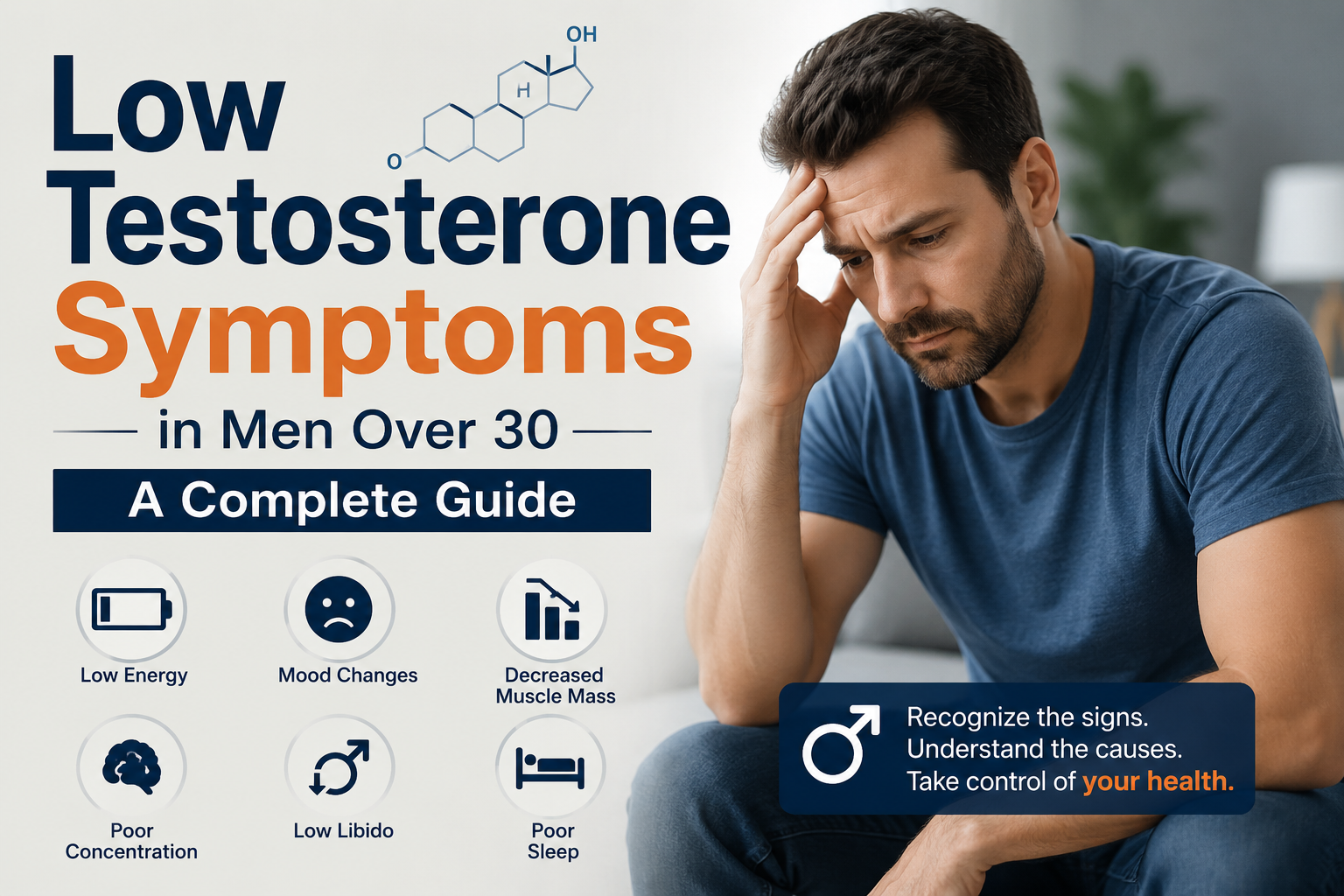
Let’s be honest. Most men brush off feeling tired, gaining a little weight, or losing interest in sex as just getting older. And sure, aging plays a role. But here’s the thing: a lot of those changes are not just a normal part of getting older. They could be signs of low testosterone, and that is something worth paying attention to.
Testosterone is the hormone that makes you feel like yourself. It drives your energy, your sex drive, your strength and even your mood. After 30 it starts to decline gradually, and by your 40s and 50s, the effects can be hard to ignore. The problem is that most men either don’t recognize the signs of low testosterone or they write them off as stress.
This guide walks you through everything you need to know about low testosterone symptoms in men over 30 what causes it, how it is diagnosed and what you can actually do about it.
What You Will Learn in This Guide
• What testosterone is and why it matters after 30
• Common low testosterone symptoms men experience
• The emotional and relationship effects most men ignore
• How low T is diagnosed and treated
• Natural and medical options to boost testosterone
• When to see a doctor
What Causes Low Testosterone After 30?
Testosterone peaks in your late teens and early 20s. After that it starts a slow decline of about 1 percent per year starting around age 30. That might not sound like much but over a decade or two it adds up. Beyond natural aging, several lifestyle and health factors speed up this decline significantly.
Main Causes of Testosterone Decline
- Aging: The most common cause. Natural testosterone decline starts around 30 and continues steadily.
- Poor sleep: Even one week of sleeping fewer than 5 hours per night can drop testosterone levels by 10 to 15 percent.
- Chronic stress: High cortisol from ongoing stress directly suppresses testosterone production.
- Obesity: Body fat converts testosterone into oestrogen through an enzyme called aromatase. More fat means less testosterone.
- Type 2 diabetes: Insulin resistance is closely linked to lower testosterone levels in men.
- Lack of exercise: A sedentary lifestyle leads to muscle loss and hormonal imbalances over time.
- Alcohol and smoking: Both suppress the endocrine system and reduce testosterone production significantly.
- Certain medications: Opioids, steroids, and some antidepressants can interfere with testosterone levels.
📖 Related: How to Build Stamina Fast: A Complete Beginner’s Guide If low T is affecting your energy and fitness, this beginner exercise plan can help.
Common Low Testosterone Symptoms in Men Over 30
This is the section most men come for. The symptoms of low T are wide ranging and often overlap with other conditions, which is why so many men go undiagnosed for years. Here is what to look out for.
1. Low Sex Drive (Low Libido)
Testosterone is the primary driver of sexual desire in men. A noticeable and persistent drop in your interest in sex is one of the earliest and most common signs of low testosterone. This is different from occasional low libido due to stress or fatigue. With low T it tends to be ongoing and you may simply stop thinking about sex altogether.
2. Erectile Dysfunction
While ED has many causes, low testosterone is a contributing factor for many men. Testosterone does not directly cause erections but it plays a role in stimulating the brain’s receptors that trigger sexual arousal. Men with low T often find that the desire and physical response are both reduced.
3. Fatigue and Low Energy
This is the symptom men notice most in daily life. Not just tiredness after a long day but a deep, persistent fatigue that does not go away even after a full night of sleep. You might feel drained by mid morning, struggle to get through a workout, or find yourself needing naps constantly. Research shows that men with clinically low testosterone report fatigue as their number one complaint.
📖 Related: How to Boost Energy Naturally for Men Over 30
10 science backed strategies to get your energy back starting this week.
4. Loss of Muscle Mass
Testosterone is the key hormone for building and maintaining muscle. When levels drop, muscle loss happens faster, even if you are still going to the gym regularly. You might notice that your workouts feel harder, your strength has dropped, or your body composition has shifted toward more fat and less muscle despite no major changes in diet or exercise.
5. Increased Body Fat
One of the more frustrating symptoms of low T is unexplained weight gain, especially around the belly and chest. Low testosterone disrupts the balance between fat storage and musclebui lding hormones making it much easier to gain fat and much harder to lose it. Some men even develop gynecomastia, a condition where breast tissue enlarges due to an imbalance between testosterone and oestrogen.
6. Mood Swings and Depression
Testosterone has a direct effect on mood and mental health. Men with low T are significantly more likely to experience depression, irritability, and anxiety. You might notice you are quicker to anger, less patient, or feeling a persistent low mood that you cannot shake. Importantly, many men get treated for depression without anyone checking their testosterone levels missing the underlying hormonal cause.
7. Brain Fog and Poor Concentration
Testosterone plays a role in cognitive function. Men with low levels often describe a foggy feeling, difficulty concentrating, trouble remembering things, and reduced mental sharpness. If you find yourself struggling to focus at work or feeling mentally slower than usual, low testosterone could be part of the picture.
8. Hair Loss
Testosterone is converted into dihydrotestosterone (DHT), which plays a role in hair growth. While high DHT levels are associated with male pattern baldness, low testosterone overall can reduce body and facial hair. Some men notice thinning of their beard or body hair alongside other symptoms.
9. Poor Sleep Quality
Low testosterone and poor sleep create a damaging cycle. Low T makes it harder to get deep restorative sleep, and poor sleep causes testosterone to drop further. Men with low T often wake frequently, have disrupted sleep, or feel completely unrefreshed in the morning regardless of how long they stayed in bed.
| Symptom | How Common? | Often Mistaken For |
| Low libido | Very common | Stress or relationship issues |
| Fatigue | Most reported symptom | Overwork, poor sleep |
| Mood changes | Very common | Depression, anxiety |
| Muscle loss | Common after 35 | Normal aging |
| Weight gain | Common | Poor diet |
| Brain fog | Common | Burnout, aging |
| Poor sleep | Very common | Insomnia, stress |
Emotional and Relationship Effects Most Men Ignore
Low testosterone does not just affect your body. It quietly erodes how you feel about yourself and how you connect with the people you care about. These effects are real but often go unaddressed because men tend not to talk about them.
Loss of Confidence
When you are not sleeping well, gaining weight, losing strength and not feeling interested in sex, your confidence takes a serious hit. Many men with low T describe feeling less like themselves, less capable and less driven to pursue goals they used to care about.
Reduced Motivation
Testosterone is closely linked to drive and ambition. Men with low T often describe a flattened motivation, where things that used to excite them no longer do. Work projects, hobbies, social plans all start to feel like a chore.
Relationship Struggles
The combination of low libido, irritability, emotional withdrawal and low confidence can put real strain on relationships. Partners often misinterpret these changes as lack of interest or emotional unavailability, leading to conflict and disconnection that could be avoided with proper diagnosis and treatment.
Mental Health Impact
Studies consistently show a strong link between low testosterone and clinical depression. What makes this particularly concerning is that men with undiagnosed low T often seek antidepressants as a solution, when addressing the hormonal imbalance directly would be far more effective.
Important: If you have been prescribed antidepressants for persistent low mood and fatigue but have never had your testosterone levels checked, ask your doctor for a blood test. Treating the symptom without addressing the hormonal cause rarely leads to full recovery.
How Low Testosterone Is Diagnosed
The only reliable way to know if you have low testosterone is through a blood test. Symptoms alone are not enough for diagnosis because many conditions can cause similar problems. A proper evaluation involves bloodwork and a conversation with a doctor.
Blood Tests to Ask For
- Total testosterone: The primary test. Normal range is generally 300 to 1000 ng/dL. Below 300 ng/dL is typically considered low.
- Free testosterone: Measures the active, unbound testosterone available to your cells. This can be low even when total T appears normal.
- LH and FSH: Luteinizing hormone and follicle stimulating hormone help identify whether the problem originates in the testes or the brain.
- SHBG (Sex Hormone Binding Globulin): Binds to testosterone and reduces how much is freely available.
- Oestradiol: Measures oestrogen levels. High oestrogen in men is often linked to low T symptoms.
- Full blood panel: Including thyroid function, blood sugar, iron, and vitamin D to rule out other causes.
Blood tests for testosterone should ideally be taken in the morning, between 7am and 10am, when testosterone levels are naturally at their highest. A single test is usually not enough for diagnosis. Most doctors will confirm low T with two separate morning tests.
When to See a Doctor
You should book an appointment if you have been experiencing three or more of the symptoms listed in this guide for more than a few weeks, particularly fatigue, low libido, mood changes and unexplained weight gain. Do not wait until symptoms become severe. Early intervention produces much better outcomes.
Natural Ways to Boost Testosterone
Before jumping straight to medical treatment, many men can significantly improve their testosterone levels through lifestyle changes. These are not quick fixes but they are powerful and often produce meaningful results within 8 to 12 weeks.
1. Prioritise Sleep
Sleep is arguably the most powerful natural testosterone booster. Studies show that sleeping fewer than 6 hours per night significantly suppresses testosterone. Aim for 7 to 9 hours in a cool, dark room. Protect your sleep schedule by going to bed and waking at consistent times every day including weekends.
2. Strength Training and Exercise
Resistance training is the most effective exercise for naturally raising testosterone. Compound movements like squats, deadlifts, and bench press produce the strongest hormonal response. Aim for 3 to 4 sessions per week. Adding high intensity interval training on rest days further boosts hormonal output.
3. Eat a Testosterone Friendly Diet
- Zinc: Found in oysters, red meat, pumpkin seeds. Zinc is essential for testosterone synthesis.
- Vitamin D: Men with low vitamin D consistently have lower testosterone. Get sunlight daily and consider a supplement.
- Healthy fats: Avocado, olive oil, and nuts support hormone production. Do not go ultra low fat.
- Protein: Supports muscle maintenance and hormonal balance. Aim for 1.2 to 1.6g per kg of body weight.
- Avoid ultra processed foods: Refined sugar and vegetable oils increase inflammation and disrupt hormonal balance.
4. Manage Stress Actively
Chronic stress keeps cortisol elevated and cortisol is testosterone’s enemy. Daily habits like box breathing, cold showers, time in nature, and reducing digital overload all help bring cortisol down and protect your testosterone levels.
5. Lose Excess Body Fat
Even a 10 to 15 percent reduction in body weight can meaningfully raise testosterone levels in men who are overweight. Fat tissue actively converts testosterone to oestrogen so reducing body fat directly helps restore hormonal balance.
Related: Is Ozempic Right for You? 5 Things to Check Before You Start If weight management is part of your health plan, this guide covers your medical options.
Medical Treatment Options for Low Testosterone
When lifestyle changes are not enough or when testosterone levels are clinically low, medical treatment becomes the right conversation to have with your doctor. The most common option is Testosterone Replacement Therapy.
Testosterone Replacement Therapy (TRT)
TRT involves supplementing your body’s testosterone through injections, gels, patches, or pellets. It is prescribed by a doctor and requires regular monitoring. When used correctly under medical supervision, TRT can produce dramatic improvements in energy, libido, mood, strength and overall quality of life.
Benefits of TRT
- Significant improvement in energy and motivation
- Restored libido and improved sexual function
- Increased muscle mass and reduced body fat
- Better mood, reduced depression, improved cognitive function
- Stronger bones and reduced risk of osteoporosis
Risks and Considerations
- May suppress natural testosterone production over time
- Can reduce sperm count and fertility
- Possible increase in red blood cell count requiring monitoring
- Not suitable for men with certain conditions including prostate cancer or untreated sleep apnea
- Requires regular blood tests every 3 to 6 months
Never self administer testosterone or purchase it without a prescription. Unsupervised use of testosterone carries serious health risks including cardiovascular complications and permanent suppression of natural hormone production. Always work with a licensed healthcare provider.
Who Should Avoid TRT
TRT is not appropriate for men who are trying to conceive, those with a history of prostate or breast cancer, men with uncontrolled heart failure, or those with very high red blood cell counts. Your doctor will review your full medical history before recommending treatment.
When Should You Be Concerned?
Some symptoms of low testosterone should prompt you to see a doctor sooner rather than later. Do not delay if you are experiencing any of the following.
Warning Signs That Need Medical Attention
• Severe fatigue that does not improve with rest or lifestyle changes
• Significant and rapid mood changes including thoughts of self-harm
• Complete loss of sexual function or painful erections
• Unexplained significant weight gain (10+ lbs) in a short period
• Noticeable breast tissue development (gynecomastia)
• Symptoms in men under 30 which may indicate a pituitary or testicular problem
• Testosterone symptoms alongside chest pain, shortness of breath, or dizziness
Keep Reading on Greenifyer
📖 Related Articles You Might Find Helpful:
➤ How to Boost Energy Naturally for Men Over 30
10 science backed strategies for lasting energy and vitality.
➤ How to Build Stamina Fast: A Complete Beginner’s Guide
A full 4-week training plan to rebuild your endurance from scratch.
➤ Is Ozempic Right for You? 5 Things to Check Before You Start
Everything you need to know before discussing weight loss medication with your doctor.
Conclusion
Low testosterone in men over 30 is far more common than most people realise. Millions of men are walking around with symptoms they have normalised as stress, aging, or just life. But fatigue that does not lift, a libido that has disappeared, muscle that is vanishing, and a mood that has flatlined are not things you just have to accept.
The good news is that low T is one of the most treatable hormonal conditions in men. Whether through lifestyle changes, optimised nutrition, better sleep, or medical treatment under proper supervision, most men can genuinely feel like themselves again.
If you recognise yourself in this guide, the most important thing you can do right now is get your testosterone checked. One blood test can tell you an enormous amount about what is going on in your body. Take your health seriously because you deserve to feel good.
Frequently Asked Questions
Q: At what age does testosterone start declining in men?
Testosterone begins declining gradually from around age 30, dropping approximately 1 percent per year. However some men experience more noticeable drops earlier due to lifestyle factors, obesity, or underlying health conditions. By age 45, around 40 percent of men have clinically low testosterone according to research published in the Journal of Clinical Endocrinology.
Q: Can I check my testosterone levels at home?
Yes, there are at-home finger-prick testosterone test kits available. However they should be used as a screening tool only, not for diagnosis. For a proper evaluation you need a full morning blood panel through a doctor or licensed telehealth provider who can also measure free testosterone, SHBG, and other relevant hormones.
Q: Is low testosterone the same as andropause?
Andropause is sometimes called male menopause and refers to the broader hormonal changes men experience as they age, including declining testosterone, DHEA, and growth hormone. Low testosterone is the most clinically significant component of andropause and is the one most commonly tested and treated.
Q: How long does it take to feel better after starting TRT?
Most men notice improvements in energy and mood within 3 to 6 weeks of starting TRT. Improvements in libido typically follow within 3 to 6 weeks. Physical changes such as increased muscle mass and reduced body fat usually become noticeable after 3 to 6 months of consistent treatment.
Q: Can low testosterone cause weight gain even with a healthy diet?
Yes. Low testosterone directly impairs your body’s ability to build muscle and burn fat efficiently. Even men eating well and exercising regularly can experience weight gain, particularly around the abdomen when testosterone is low. This is because the hormonal environment favours fat storage and inhibits lean muscle development.
Q: Are there foods that lower testosterone?
Yes. Research suggests that soy products in very high amounts, flaxseed in large quantities, alcohol, processed foods high in vegetable oils and high sugar foods can all negatively impact testosterone levels. Moderate consumption of most foods is unlikely to cause problems but consistently poor dietary habits definitely contribute to hormonal imbalance over time.
About the Author: Written by Sarah Mitchell Professional Medical Content Writer specialising in metabolic health men’s health and lifestyle medicine. Medically reviewed by Dr. James Harper Endocrinology and Internal Medicine Specialist. All content is based on peer reviewed and authoritative sources.
.png)